Fix My Water — Hard Water
Hard water at home:
symptoms, testing, and the right fix
Scale on your faucets, soap that won't lather, and a water heater dying ahead of schedule — these are hard water problems, and they have a well-understood fix. Here is what hardness is, how to confirm it, and when a softener actually makes financial sense.
By Tim Parker — Reads the spec sheets and prices the full install
What causes hard water
Water becomes hard by picking up dissolved calcium and magnesium as it moves through rock and soil — primarily limestone and chalk formations. Nearly all groundwater and most surface water supplies in the United States carry some hardness; the concentration varies widely by geography. The USGS estimates that approximately 85% of U.S. households have water harder than 3.5 gpg (60 mg/L). In the Midwest and Southwest, readings of 15–25 gpg or higher are common.
Hardness is not a health concern — calcium and magnesium are essential minerals. For health information on drinking water, see epa.gov/sdwa. The problems are to your home: scale deposits, appliance wear, and the economics of premature equipment replacement.
The symptoms you can see
| Symptom | What's happening | Typical hardness threshold |
|---|---|---|
| White scale on faucets and showerheads | Calcium carbonate precipitating as water evaporates | Noticeable above 7 gpg; heavy above 15 gpg |
| Soap scum on shower walls and tubs | Calcium reacting with soap fatty acids to form insoluble film | Visible above 7 gpg |
| Glassware spotting after dishwasher | Mineral deposits left behind when water film evaporates | Common above 10 gpg; severe above 20 gpg |
| Dull or stiff laundry | Hardness minerals binding into fabric fibers | Detectable above 7 gpg; significant above 15 gpg |
| Water heater running less efficiently | Scale coating heating element — each 1/4" of scale reduces efficiency ~25% | Accelerated damage above 10 gpg |
| Reduced flow from showerheads | Scale buildup inside nozzle openings | Visible within months above 15 gpg |
The appliance wear argument
The financial case for a softener often hinges on water heater life. A conventional tank water heater has an expected service life of 10–15 years on soft water. On very hard water (15+ gpg), scale accumulation on the heating element and tank bottom shortens that to 6–8 years in some cases — and scale dramatically increases operating costs in the meantime, because a scaled heating element must work harder to transfer the same heat.
The same dynamic applies to dishwashers, washing machines, and ice makers — any appliance that heats water or has small orifices water passes through. A $1,400–$2,500 softener installation is often offset by appliance replacement deferrals and lower utility bills, particularly at hardness above 15 gpg.
How to test correctly
Step 1 — get a lab panel.Contact your state's cooperative extension service (land-grant university network) or county health department. Most offer certified hardness tests for $30–$60. Request the result in grains per gallon (gpg). Many labs report in mg/L as calcium carbonate — divide by 17.1 to convert to gpg.
If you are on city water,your utility publishes an annual Consumer Confidence Report (CCR) with hardness data. It is free, online, and usually accurate — look for your utility name plus "CCR" or "water quality report." This gives you a baseline without paying for a test.
If you are on a well, a lab test is essential — well water hardness is not published anywhere. Also test for iron while you are at it: if iron is above 0.3 ppm, that must be addressed before a softener (iron fouls ion-exchange resin). See the well water guide for the full treatment sequence.
What to do about it
Once you have your hardness number, the decision is straightforward:
- Below 7 gpg: no treatment needed for hardness. Consider a carbon filter if chlorine taste is the issue.
- 7–15 gpg: either a salt-based softener (removes hardness completely) or a salt-free conditioner (reduces scale adhesion, hardness minerals remain). Understand the difference before deciding.
- Above 15 gpg: a salt-based ion-exchange softener. Salt-free conditioners are not reliable at these levels for appliance protection.
For the full breakdown of salt-based vs. salt-free options, sizing by household, and installed cost ranges, see the best water softener guide. For households that also need filtration (chlorine, iron, PFAS), see the SpringWell combo systems review.
What a softener won't fix
A softener handles hardness and hardness only. It will not remove chlorine, PFAS, iron, bacteria, nitrates, or any chemical contaminants from your water. If you have a chlorine taste problem, that needs a carbon filter — separate equipment, separate purpose. If PFAS is a concern, a certified under-sink RO system at the kitchen tap is the documented approach — see the PFAS guide and the Aquasana SmartFlow RO review.
Questions owners actually ask
How do I know if I have hard water?
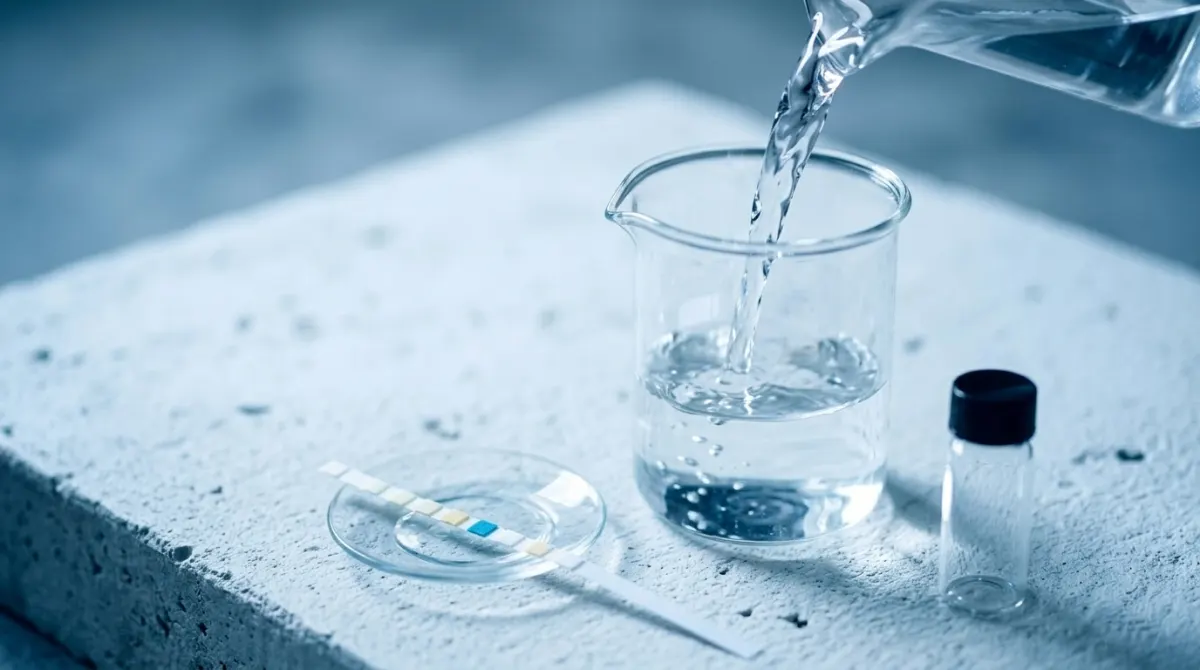
The most reliable method is a lab test. A certified water test panel from your state's cooperative extension service or local health department runs $30–$60 and gives you hardness in grains per gallon (gpg) or milligrams per liter (mg/L). Visible symptoms — white scale deposits on faucets and showerheads, soap scum that doesn't rinse cleanly, glassware that spots after washing — are reliable indicators that hardness is above 7 gpg. Strip tests from hardware stores give a rough range but not the precision needed to size a softener correctly.
Is it safe to drink hard water?
Yes — hard water is not a health hazard. Calcium and magnesium, the minerals that cause hardness, are essential nutrients. The EPA does not regulate hardness as a health contaminant, though it includes it in secondary standards as an aesthetic concern. The problems caused by hard water are to your property and appliances, not to your health. For EPA guidance on drinking water, visit epa.gov/sdwa.
What removes hardness from water?
Salt-based ion-exchange softeners are the only technology that removes hardness minerals from water. They exchange calcium and magnesium ions for sodium ions on a resin bed, producing genuinely soft water. Salt-free conditioners (descalers) modify the crystalline structure of hardness minerals to reduce scale adhesion, but the minerals remain in the water — the water is still chemically hard. Reverse osmosis removes hardness at the point of use (one tap) but is not practical for whole-house softening.
What is the white stuff on my faucets and showerheads?
White or off-white deposits on faucets, showerheads, and appliance heating elements are limescale — calcium carbonate and other hardness minerals that precipitate out of water when it evaporates or is heated. Scale is the primary mechanism by which hard water damages water heaters, dishwashers, and washing machines: it coats heating elements, reducing heat transfer efficiency and eventually causing failure. A salt-based softener prevents new scale formation entirely. Existing scale can be dissolved with citric acid solutions or commercial descalers before installing a softener.
The fix for confirmed hard water is a metered ion-exchange softener, and this is the one we point first-time buyers at — size it with the grain capacity calculator before you order: