Verdict: BUY · Score 90/100
SpringWell WS1 review:
iron filter specs, flow rate and cost
If your fixtures stain orange or the water smells like rotten eggs, no carbon filter on Earth will save you — you need oxidation. The WS1 does it with air instead of chemicals, in one tank, and its removal numbers are published where everyone can check them.
By Tim Parker — Reads the spec sheets and prices the full install
What it is
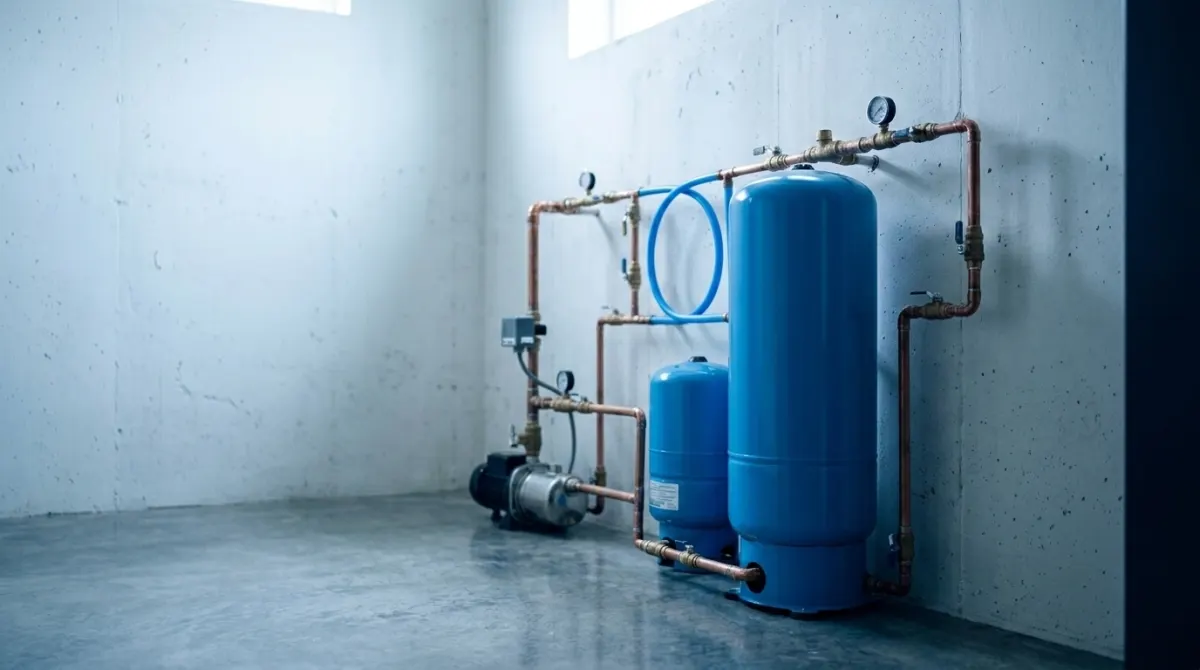
An air-injection oxidizing filter for well water: the system maintains a pocket of compressed air at the top of the tank, incoming water passes through it, dissolved ("clear-water") iron and hydrogen sulfide oxidize into solid particles, and a media bed catches them. The bed backwashes itself on a schedule — no chlorine pellets, no potassium permanganate, no monthly chemistry homework. Published handling: up to 7 ppm iron, 8 ppm hydrogen sulfide, 1 ppm manganese.
We earn nothing if you buy through this link — the manufacturer sells it directly and we are not in their programme.
The numbers that decide it
| Checkpoint | WS1 | Our read |
|---|---|---|
| Iron handling | Up to 7 ppm | Covers the vast majority of staining wells |
| Sulfur (H₂S) | Up to 8 ppm | The rotten-egg smell, gone at the source |
| Service flow | 12 GPM rated | Whole-house headroom, even at 4 baths |
| Consumables | None — air does the oxidizing | Electricity + occasional backwash water only |
| Typical street price | $2,250 | Read from SpringWell's own schema.org Product markup on 2026-07-25 — curl is blocked, so it was read in a browser |
| Installed cost | $2,250–$3,000 | Hardware plus a typical whole-house install allowance; labour varies by region, so get a local plumber quote |
| Needs power & drain | Yes — control valve + backwash line | Plan the install location around this |
How air-injection oxidation works, step by step
Understanding the mechanics matters here because it explains both why air-injection is effective and where its limits are.
Step 1 — Air pocket formation.The WS1's control valve traps a pocket of compressed air at the top of the tank during the service cycle. As water enters the tank, it passes through this air pocket before reaching the media bed below.
Step 2 — Oxidation. Contact with oxygen converts dissolved (ferrous) iron — which is invisible in water — into solid ferric iron particles. Hydrogen sulfide gas is similarly oxidized into elemental sulfur, which is a solid. This transformation is what makes the contaminants catchable by a filter; you cannot mechanically filter dissolved iron any more than you can filter dissolved salt.
Step 3 — Filtration. The oxidized particles fall into the media bed — a mix of filter material designed to capture fine particles — where they accumulate during normal service flow.
Step 4 — Backwash cycle. On a programmable schedule (typically timed for low-demand hours, like 2 a.m.), the control valve reverses flow, flushing accumulated iron and sulfur solids out through the drain line. It also replenishes the air charge in the top of the tank. The cycle runs 10–15 minutes and requires a drain connection — a floor drain or utility sink within a reasonable distance.
The key performance variable is contact time between incoming water and the air pocket. An undersized tank at high flow rates reduces that contact time, lowering oxidation efficiency. That is why sizing by both iron concentration (ppm) and peak flow demand (GPM) is not optional — it is the difference between a system that holds and one that lets iron break through under peak demand.
Sizing by iron ppm and bathrooms
| Iron concentration | 1–2 bath home | 3–4 bath home | Notes |
|---|---|---|---|
| 0.3–3 ppm | WS1 standard size | WS1 standard size | Most residential wells; air-injection handles it cleanly |
| 3–7 ppm | WS1 with oxidizing media (Filox/Birm) | WS1 with oxidizing media | Higher media bed required; verify drain capacity |
| Above 7 ppm | Larger tank or two-stage system | Professional sizing required | pH below 6.8 also degrades performance — test both |
pH is the overlooked variable. Air-injection oxidizes iron most efficiently above pH 6.8. Wells with acidic water (below 6.5) may need a pH neutralizer — calcite or a blend media — installed upstream to lift the pH before oxidation. This is a $400–$700 add at typical plumber rates but dramatically improves oxidation efficiency on acidic wells. Your lab panel will tell you whether this applies.
WS1 vs chemical injection systems
The alternative to air-injection is chemical oxidation: a chlorine or potassium permanganate injection system doses the incoming water before a contact tank and filter. Chemical injection handles higher iron concentrations and iron bacteria more reliably, but it requires a chemical feed pump, solution tank, and a monthly supply of oxidant. For most residential wells testing under 7 ppm iron with no iron bacteria present, the WS1's air-injection approach is the simpler and lower-maintenance path — no chemicals to store, no dosing to calibrate, no pump to service.
Where chemical injection wins: iron bacteria confirmed by lab test, iron above 10 ppm, or manganese above 1 ppm where you need the additional oxidation horsepower of permanganate. In those cases, a water treatment professional should size the system — and test your well for iron bacteria first, because the WS1 will not clear that on its own.
The honest caveats
Test your water first. The WS1 is built for dissolved iron and sulfur. If your well carries iron bacteria(slimy red-brown gunk in the toilet tank), oxidation alone won't hold and you'll want a different protocol — our iron guide shows how to tell the difference with a $40 lab test before you buy a tank. It also won't soften water— hardness scale is a separate problem with a separate tank. And like the CF1, performance is engineering-standard but not NSF-system-listed; the spec sheet is published, the third-party stamp isn't.
Verdict — 90/100
BUY for iron and sulfur wells. Chemical-free oxidation, published removal numbers, and nothing to refill — this is the configuration most staining wells actually need.
Start at the well water hub if you haven't matched your symptom to a media yet — and add a carbon stage downstream only after the iron is handled.
Questions owners actually ask
Can you filter out iron from well water?
Yes — but the method depends on which form of iron is present. Dissolved (ferrous) iron and hydrogen sulfide respond well to air-injection oxidation: the system oxidizes iron into solid particles, then filters them out. Particulate (ferric) iron can be mechanically filtered with a sediment prefilter. Iron bacteria require well shock chlorination before any filter system will hold. A $30–$60 lab panel from your state extension service identifies the form and concentration before you commit to equipment.
What is the best filter for iron in well water?
For ferrous and ferric iron up to 7 ppm, an air-injection oxidizing filter like the SpringWell WS1 is the most practical residential solution: one tank, no chemicals, self-backwashing. For higher concentrations or iron bacteria, a two-stage approach — shock chlorination plus oxidizing media — is required. The right answer depends on your ppm reading and pH, both of which a certified lab test provides for $30–$60.
How much is an iron filter for well water?
SpringWell does not publish WS1 pricing in a form we can read and cite — springwellwater.com blocks automated checks — so we do not print a figure for it. Check the current system price at springwellwater.com, then get a local plumber quote for installation labor, which varies by region and by whether your plumbing needs new fittings or a drain modification. What is published: media life is typically 10+ years and there are no consumable cartridges, so the upfront cost is the primary expense.
Is it safe to drink well water that has iron in it?
The EPA sets a secondary maximum contaminant level for iron at 0.3 ppm — not a health standard, but a guideline based on aesthetic effects (taste, staining). For health guidance on iron in drinking water, visit epa.gov. From a property and equipment standpoint, iron above 0.3 ppm stains fixtures and laundry; above 1 ppm it accelerates appliance wear and damages softener resin. An iron filter protects your plumbing and appliances regardless of health considerations.
We earn nothing if you buy through this link — the manufacturer sells it directly and we are not in their programme.