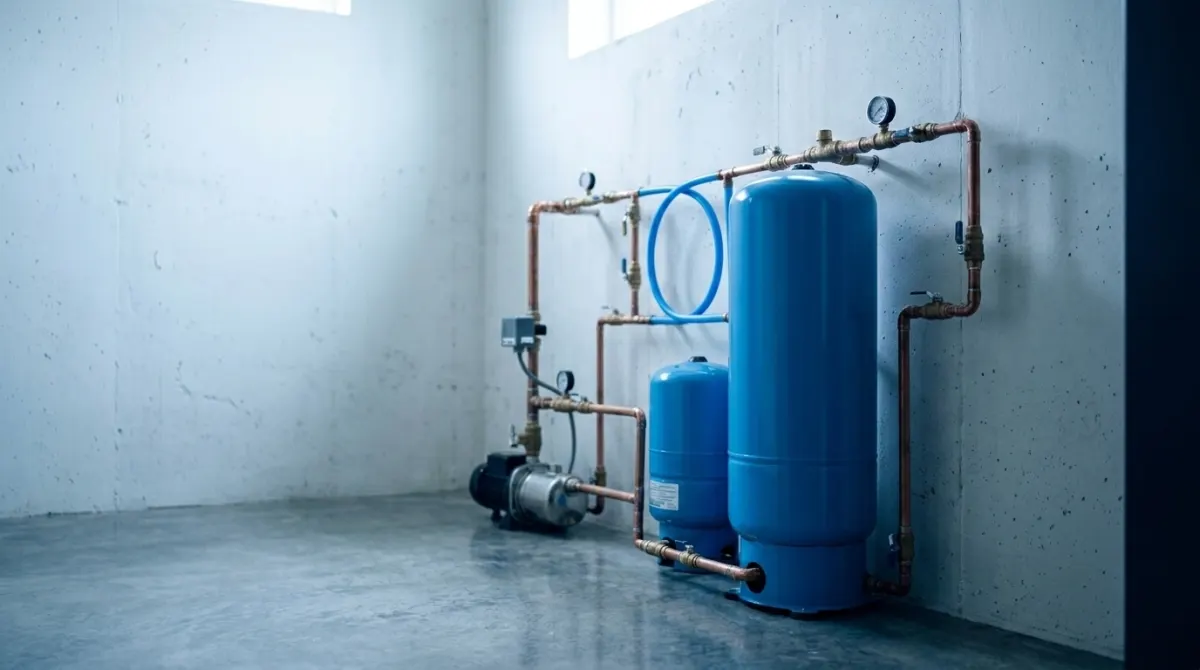
Head-to-Head — Well Water 2026
Aquasana well-water Rhino
vs SpringWell WS1: iron filters, on the specs
Two approaches to well-water treatment: SpringWell's air-injection oxidation system vs Aquasana's multi-stage well-water filter. The right call depends entirely on your iron ppm — here is the decision tree.
By Tim Parker — Reads the spec sheets and prices the full install
The fundamental difference
These two systems use different technologies to solve what may look like the same problem. Understanding the difference before comparing prices is the only way to make the right call.
SpringWell WS1 — an air-injection oxidation filter. It injects a pocket of air into the water as it enters the tank. Dissolved iron (ferrous) and hydrogen sulfide (sulfur) react with the oxygen and oxidize into particles — rust and sulfur precipitate — that the media bed then captures mechanically. The oxidized particles backwash to drain on a timer. No chemical feed. No potassium permanganate. Self-maintaining with electricity and a drain line.
Aquasana well-water Rhino — a multi-stage filtration system for well water. Aquasana makes a well-water specific version of their Rhino system, distinct from the standard city-water model. It uses stages including sediment filtration, KDF (copper-zinc) media for heavy metals and some iron reduction, and activated carbon. It is designed for the full well water chemistry profile — sediment, iron (at lower concentrations), chlorine (for post-chlorination systems), taste, and odor — in a single-tank format.
Note: Aquasana's current well-water product name and exact configuration should be confirmed at aquasana.com — product lines are updated periodically. Verify the specific iron ceiling and media stages for the current model before purchasing.
We earn nothing if you buy through this link — the manufacturer sells it directly and we are not in their programme.
Head-to-head
| Spec | SpringWell WS1 | Aquasana Well-Water Rhino |
|---|---|---|
| Treatment technology | Air-injection oxidation — converts dissolved iron/sulfur to filterable particles | Multi-stage: sediment + KDF + carbon |
| Iron ceiling (ferrous) | Up to 7 ppm (per SpringWell published specs) | Moderate — KDF handles some iron; confirm ceiling at aquasana.com |
| Hydrogen sulfide (sulfur) | Up to 8 ppm H₂S (per SpringWell published specs) | KDF-55 handles some H₂S; confirm ceiling at aquasana.com |
| Sediment and turbidity | Handles mechanical filtration via media bed | Dedicated sediment stage — direct mechanical filtration |
| Chlorine / taste / odor | Not the primary purpose — add carbon stage downstream if needed | Activated carbon stage included |
| Service flow | 12 GPM rated (per SpringWell published specs) | Not confirmed for the current well-water model — check aquasana.com |
| Drain line required | Yes — backwash and regeneration cycle | No backwash drain (media-based system) |
| Electricity required | Yes — control valve and air injector | No — passive filtration |
| Typical street price (system) | $2,250 | Not published here — verify at aquasana.com |
| Media life | 10+ years (air-injection media — no consumable cartridges) | Periodic replacement per Aquasana schedule — verify at aquasana.com |
The decision tree
The choice comes down to iron concentration. Test your water first — a lab panel from your state's cooperative extension service for $30–$60 gives you the iron ppm reading you need.
Iron above 3 ppm OR hydrogen sulfide present
Buy: SpringWell WS1
Air-injection is the appropriate technology for high-iron and sulfur wells. The Aquasana well-water Rhino's KDF stage handles some iron, but at high concentrations an oxidation-based system is more reliable. The WS1's 7 ppm iron ceiling and 8 ppm H₂S ceiling cover typical residential well chemistry.
Iron below 1–2 ppm, sediment and taste are primary concerns
Consider: Aquasana well-water Rhino
For wells with low iron where the main issues are sediment, taste, odor, and general well chemistry, the Aquasana well-water Rhino's multi-stage design is worth evaluating. No drain line or electricity needed. Confirm the current model's iron ceiling at aquasana.com for your specific test result before purchasing.
Iron 1–3 ppm — the gray zone
Test result drives the call
In the 1–3 ppm range, both approaches may work. KDF-based systems handle low ferrous iron, but performance varies with water chemistry (pH, competing ions). Contact both manufacturers with your specific test panel — a good support team will tell you honestly whether their system is appropriate for your numbers. If there is any uncertainty, the WS1 is the conservative choice: it has more headroom above your iron level.
Ten-year cost comparison
Neither manufacturer publishes pricing we can read and cite, so this compares the shape of the running costs, not dollar totals. The WS1 uses a no-consumable-cartridge operating model: the air-injection media lasts 10+ years with no filter replacements, and the only ongoing costs are electricity (control valve) and backwash water. The Aquasana well-water Rhino carries periodic media and filter replacement expenses — verify the current replacement schedule and cost at aquasana.com, and get the system prices from each manufacturer directly.
| Cost item | SpringWell WS1 | Aquasana Well-Water Rhino |
|---|---|---|
| System + install | $2,250–$3,000 | Not published here — verify at aquasana.com |
| 10-yr media/filter replacements | ~$0 (no consumable cartridges) | Per Aquasana replacement schedule — verify at aquasana.com |
| 10-yr electricity (est.) | ~$50–$100 (control valve, low draw) | None |
| 10-yr total | Purchase price plus roughly $50–$100 of electricity — no cartridge spend | Purchase price plus the Aquasana replacement schedule — confirm both |
Verdict
High iron or sulfur: WS1. Low iron, sediment and taste primary: evaluate the Aquasana well-water Rhino. Test first — the iron number decides it.
Full WS1 review with the spec sheet: SpringWell WS1 review. Well-water treatment sequence from sediment to softener: well water guide.
Questions owners actually ask
What is the best whole house water filter for well water with iron?
For ferrous iron up to 7 ppm and hydrogen sulfide up to 8 ppm, the SpringWell WS1 air-injection system is the category leader on published specifications: 12 GPM service flow, no chemical feed required, self-backwashing on a timer. For wells with lower iron concentrations (below 3 ppm) combined with sediment, chlorine (post-chlorination systems), and general filtration needs, Aquasana's well-water Rhino system is a multi-stage filter designed specifically for well water. The right choice depends on your confirmed water test results — specifically iron concentration in ppm and whether sulfur (hydrogen sulfide) is present.
Does the Aquasana Rhino work for well water?
Aquasana makes a well-water specific version of their Rhino system (separate from the standard city-water Rhino). It is a multi-stage filter designed for well water chemistry, typically including a sediment stage, copper-zinc (KDF) stage, and activated carbon stage. It is not an air-injection iron filter — for wells with ferrous iron above approximately 1–3 ppm, the Aquasana well-water Rhino may not adequately address iron, and an air-injection system like the SpringWell WS1 is a better fit. Confirm the specific iron ceiling for the Aquasana well-water product at aquasana.com before purchasing.
How much iron can the SpringWell WS1 handle?
The SpringWell WS1 is rated for up to 7 ppm of ferrous (dissolved) iron and up to 8 ppm of hydrogen sulfide per SpringWell's published specifications. Above 7 ppm iron, professional sizing is required — some installations at higher concentrations use a two-stage approach. The WS1 also addresses manganese; confirm the specific manganese ceiling at springwellwater.com for your water test result. Iron bacteria (a separate problem from dissolved iron) requires shock chlorination before any filter system will hold.
Do I need an iron filter or a water softener for well water?
Likely both, if your well has both iron and hardness — which is common. The treatment order matters: iron filter first, softener second. Iron above 0.3 ppm rapidly fouls softener resin if it reaches the resin bed, destroying capacity and requiring premature replacement. An air-injection iron filter (like the WS1) removes iron and sulfur upstream, then softened water runs through for the house. If you only have hardness with no significant iron, an iron filter is not needed — go straight to a softener. If you only have iron with no hardness worth treating, skip the softener.
We earn nothing if you buy through this link — the manufacturer sells it directly and we are not in their programme.